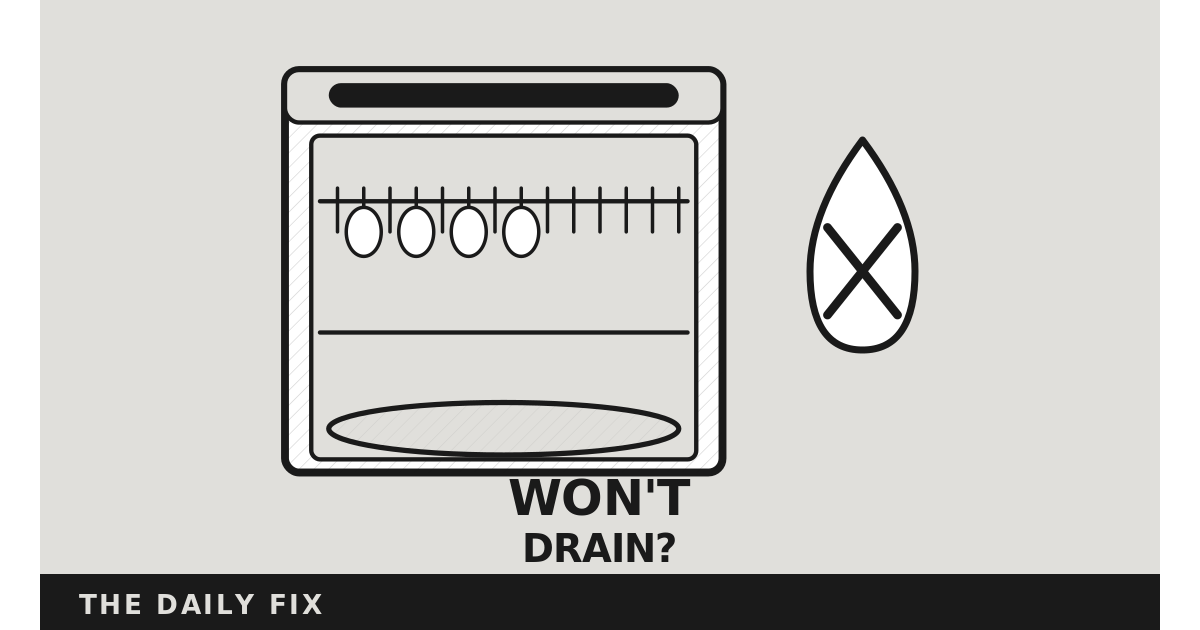
Dishwasher Not Draining? Here's the Fix (No Repair Call Needed)
Standing water at the bottom of your dishwasher after a cycle almost never means the machine is broken. Dishwashers drain through a filter, then a drain hose, then into your sink drain — when water sits, that path is blocked somewhere. The most common culprit is the filter, a mesh screen at the bottom of the tub that’s designed to be removed and cleaned, but that most renters have never touched because nobody tells them it exists.
What you need
A few old towels or rags, a small bowl for scooping out standing water, a soft brush or old toothbrush, and dish soap. That’s it.
Step 1: Remove the standing water
Scoop out most of the water with a cup or bowl, then use a towel or sponge to absorb the rest so you can see the bottom of the tub clearly.
Step 2: Find and clean the filter
On most dishwashers the filter sits in the center or rear bottom of the tub — a circular piece with a mesh screen, often with a smaller cylindrical filter inside it. Twist counterclockwise and lift it out (there’s usually a flat mesh filter underneath too). Rinse both pieces under warm water and scrub off debris with the toothbrush — nothing abrasive — until the water runs clean through. Reinsert flat mesh first, then the cylindrical piece, and twist clockwise to lock it.
Step 3: Check the drain hose
Under your sink, find the corrugated hose running from the dishwasher to the drain or garbage disposal. Make sure it isn’t kinked, pinched, or crushed against the cabinet wall. If it connects to a disposal, confirm the knockout plug was removed when the disposal was installed — a missed knockout is a common cause of drainage problems in apartments with newer disposals.
Step 4: Run a cleaning cycle
Drop a dishwasher cleaning tablet in the bottom of the tub — not the detergent dispenser — and run the hottest, longest cycle available. The hot water and cleaning agent break up grease residue in the drain line that filter cleaning alone might miss.
Step 5: Test the drain
After the cycle, check the bottom — it should be dry or have just a thin film of residual water. Standing water that’s still there after cleaning the filter and checking the hose points to the drain pump or a deeper blockage, and that’s a landlord repair, not a maintenance task.
Mistakes to avoid
- Skipping the filter entirely. It needs cleaning every one to three months, and a clogged filter causes most drain problems.
- Calling for a repair before checking anything. A diagnostic visit runs $80–$150, and in most cases the technician just cleans the filter and leaves.
Remove the standing water, pull and clean the filter, check the hose for kinks, and run a cleaning cycle. That sequence fixes it most of the time — if it doesn’t, that’s when you call your landlord.
Products mentioned in this post
Some links above are affiliate links. We may earn a commission at no extra cost to you.
Related Posts
How to Clean Your Washing Machine (It's Dirtier Than You Think)
If your laundry smells musty, it's the machine, not the detergent. Here's how to clean the gasket, dispenser, and drain filter for good.
How to Change Your Apartment Air Filter (3 Minutes, Better Air, Lower Bills)
Changing your HVAC filter takes three minutes and costs about $12 but lowers your energy bill. Here's how to find it, size it, and swap it correctly.