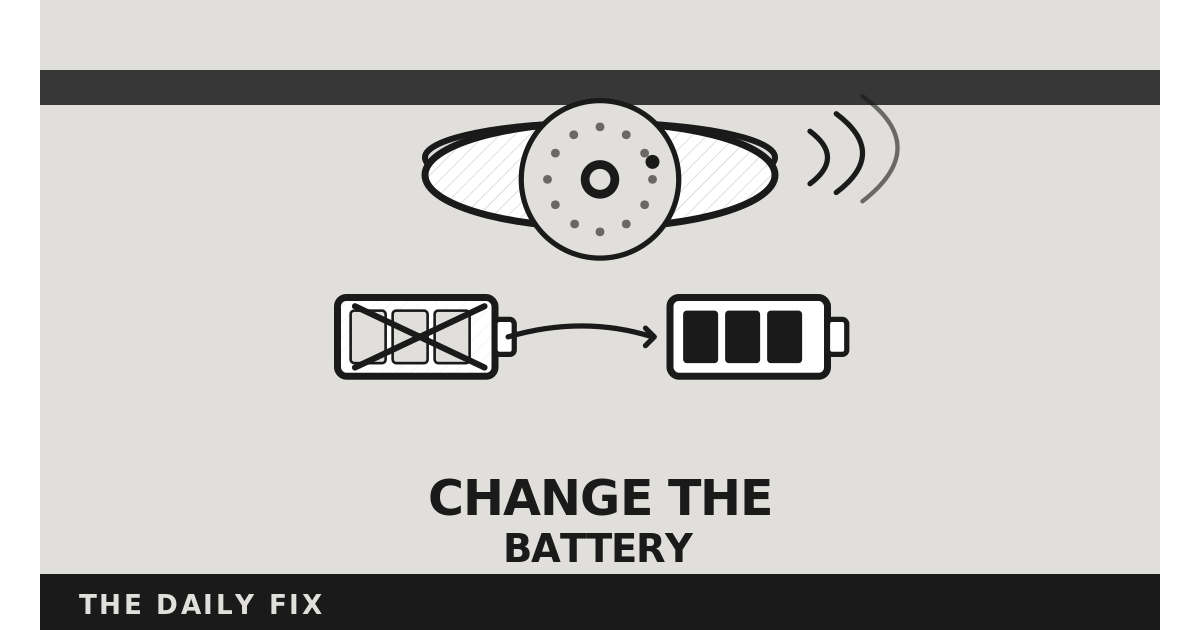
How to Replace a Smoke Detector Battery (And When to Replace the Whole Unit)
Smoke detectors communicate with exactly two sounds: a continuous alarm means smoke or carbon monoxide was detected — get out. A single chirp every 30 to 60 seconds means the battery is low. That chirp is a reminder, not an emergency, but too many detectors end up sitting in a drawer with the battery removed because the chirping got annoying at 3am. A detector with a dead or missing battery is a real safety gap, and the fix takes under two minutes.
What you need
One 9-volt battery (about $3 at any grocery, pharmacy, or hardware store), and a step stool if your detector is ceiling-mounted. Some newer detectors use AA or AAA batteries instead — check the back of the unit or its manual.
Step 1: Find which detector is chirping
Stand still and listen — the chirp comes from one specific unit, not all of them. If you can’t tell which, go quiet for 30–60 seconds and wait for the next chirp.
Step 2: Remove the detector
Most detectors twist off their mounting base counterclockwise; some have a side release tab. Once it’s in your hand, you’ll see the battery compartment on the back or side.
Step 3: Replace the battery
Open the compartment, remove the old battery, and insert the new 9-volt, matching positive and negative terminals to the diagram inside. Snap the compartment closed.
Step 4: Test it
Press and hold the TEST button on the face for three seconds — you should hear a loud alarm pattern confirming the detector and battery work. Remount by lining it up with the base and twisting clockwise until it clicks.
Step 5: Check the expiration date
While it’s in your hand, look for a manufacture or expiration date on the back label. Smoke detectors have a functional lifespan of 10 years — after that, the sensor degrades and can’t reliably detect smoke even with a fresh battery. If yours is over 10 years old, replace the unit, not just the battery — a combination smoke and CO detector runs $25–$35 and installs in the same base.
Mistakes to avoid
- Removing the battery and not replacing it. A detector with no battery provides no protection — swap it the same day.
- Ignoring the expiration date. Detectors fail silently, with no alarm telling you the sensor stopped working — checking the date is the only way to know.
Replace the 9-volt battery, press the test button, remount the unit, and check the expiration date while it’s in your hand. If it’s over 10 years old, replace the whole thing — $25 well spent.
Products mentioned in this post
Some links above are affiliate links. We may earn a commission at no extra cost to you.
Related Posts

How to Build a Basic Apartment Emergency Kit (Under $75, One Afternoon)
A basic apartment emergency kit costs under $75 and takes one afternoon to build. Here's exactly what to get and why each item matters.
How to Shut Off Your Water in an Emergency (Find It Before You Need It)
When water is actively damaging your apartment, knowing where the shutoff is matters more than anything else. Here's where to look, before you need it.

What to Do When Your Circuit Breaker Trips
A tripped breaker won't reset if you skip one step. Here's the exact sequence to fix it — and what it means if it trips again right away.