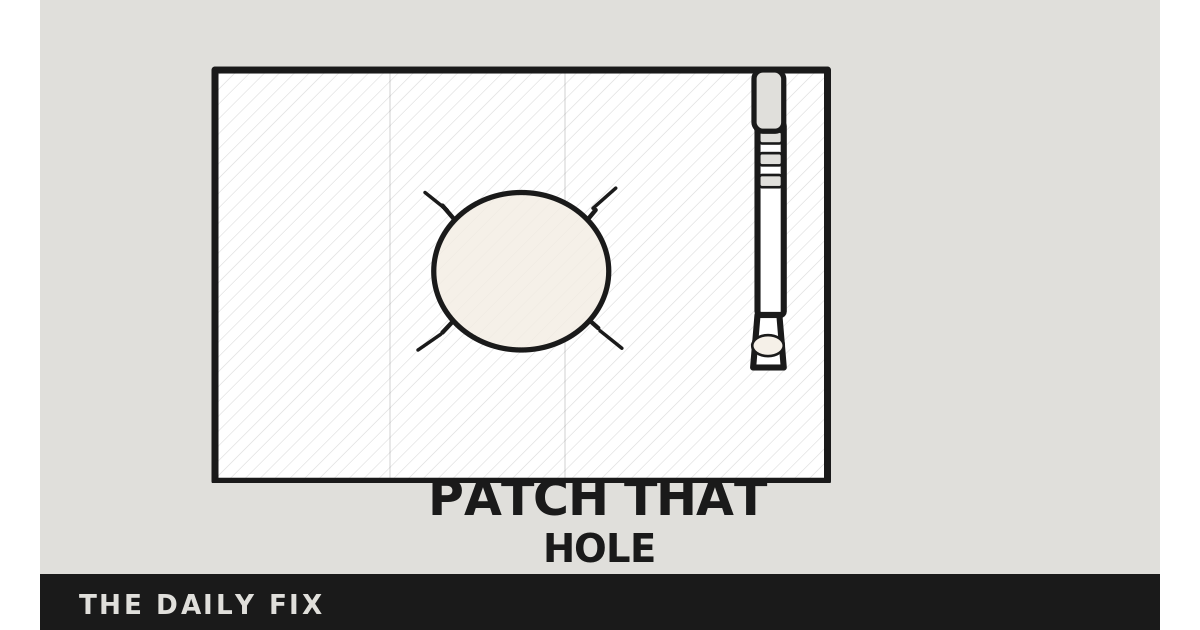
How to Patch a Hole in the Wall (Before You Lose Your Security Deposit)
Before you hand in your keys, every small hole in your walls needs to be filled — landlords deduct for them, even nail holes in many cases. Most holes fall into two categories: small ones from nails and picture hooks, and medium ones from drywall anchors or accidental damage. The material differs, but the process is the same: fill, dry, sand, paint.
What you need
For small holes: lightweight spackling compound (about $5, any hardware store or Walmart) — don’t use heavy-weight drywall compound, which shrinks and needs multiple coats. For medium holes (quarter-size up to about three inches): a self-adhesive mesh wall repair patch ($8–$12). For both: a putty knife (or just your finger for small holes), 220-grit sandpaper, and touch-up paint matching your wall color.
Step 1: Prepare the hole
Clean any loose drywall paper or debris from the edges. For larger holes, press the crumbling edges firm first, then apply the self-adhesive mesh patch, pressing it flat so all edges seal against the wall.
Step 2: Apply the spackling
For nail holes, press a small amount into the hole with your finger or a putty knife, slightly overfilling it — one application is enough. For a mesh-patched hole, spread compound over the patch with the putty knife, feathering the edges outward so it blends into the surrounding wall; it will be slightly raised since it shrinks as it dries.
Step 3: Let it dry completely
Lightweight spackling cures to bright white — while drying it looks slightly translucent or gray in the center. Don’t sand until it’s completely white through, roughly 30–60 minutes for a nail hole and one to two hours for a larger patch. Large patches may need a second coat after sanding the first.
Step 4: Sand smooth
Once fully dry, sand with light circular motions until it’s flush with the wall — run your fingers over it to check for bumps or raised edges. Wipe away dust with a damp cloth and let it dry.
Step 5: Paint
Use a small foam roller or brush with a dabbing motion, not brush strokes, which better matches the wall’s texture. Larger patches may need the entire wall panel repainted corner to corner, since touch-up paint rarely matches perfectly unless it’s very recent.
Mistakes to avoid
- Sanding before it’s fully dry. It smears and pulls compound back out of the hole.
- Applying too much at once on a large hole. Thick applications crack — build up in thin layers.
- Skipping the paint. An unpainted patch reflects light differently and stays visible.
Small holes take about 20 minutes of active work plus an hour of drying time. Do it before your move-out walkthrough and it won’t show up on your deposit deduction list.
Products mentioned in this post
Some links above are affiliate links. We may earn a commission at no extra cost to you.
Related Posts

How to Re-Caulk a Bathtub (Stop Water From Getting Into Your Walls)
Cracked caulk around your tub isn't cosmetic — it's a path for water to get behind your walls. Here's how to redo it properly in an afternoon.
Outlet Not Working? It's Probably a GFCI — Here's the 10-Second Fix
If an outlet near water stopped working, it probably isn't broken — it tripped. Here's the fix, and why the tripped outlet might be in another room.
How to Unclog a Toilet (Without Making It Worse)
Whatever you do, don't flush again. Here's the right plunger, the right technique, and how to clear a toilet clog in under five minutes.