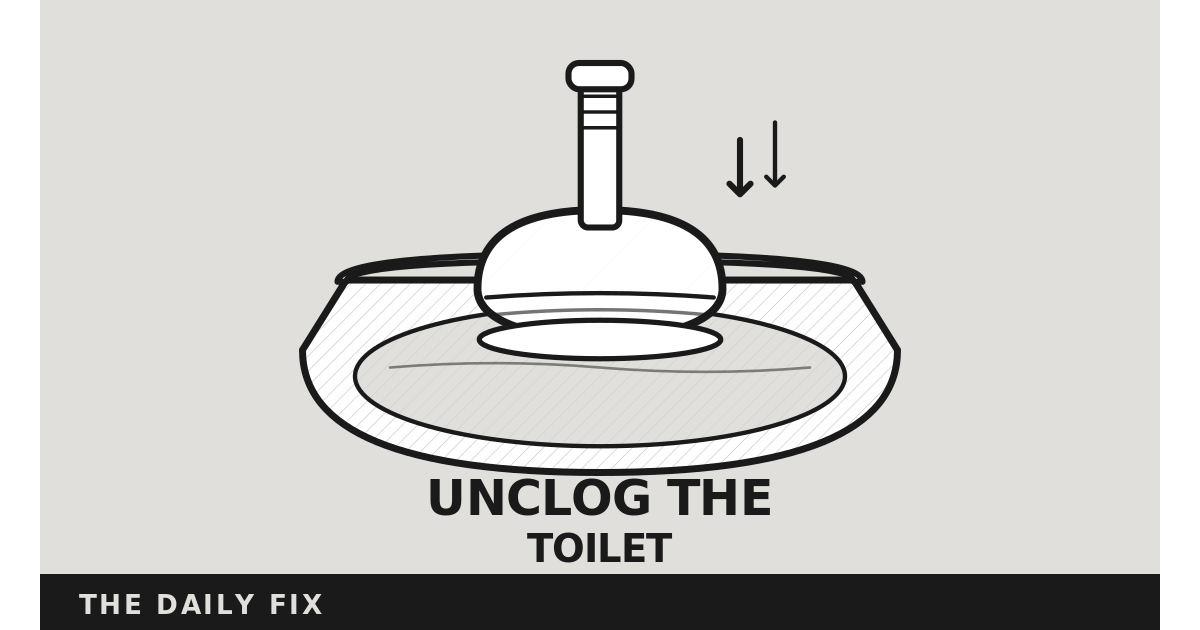
How to Unclog a Toilet (Without Making It Worse)
When a toilet clogs, most people instinctively flush again — the one thing you shouldn’t do. The clog sits in the S-trap, the curved pipe just below the bowl, and flushing again just adds more water to a bowl that can’t drain, risking overflow. A plunger works by creating a pressure difference that pushes the clog through the trap and into the larger drain — but only with the right tool and technique.
What you need
A flange plunger, not a standard cup plunger. It has an extended rubber flap that folds out to seal against a toilet’s drain opening — a cup plunger won’t seal correctly and won’t work. If that’s all you have, it’s worth $15 to get the right tool. Rubber gloves and old towels for splashing round it out.
Step 1: Stop — don’t flush again
If the bowl is nearly full, flushing will overflow it. If the water level is dangerously high, turn the supply valve behind the toilet clockwise to buy yourself time.
Step 2: Position the plunger
Fit the flange into the drain opening so it forms a seal, and make sure the plunger head is fully submerged in water — air inside the bell won’t build pressure. Add water from the sink with a cup if there isn’t enough in the bowl.
Step 3: Plunge with the right technique
Push down slowly on the first stroke — pushing fast can force air back at you. After that, use six to eight firm up-and-down strokes while maintaining the seal. On the final stroke, pull up sharply to break the seal — that often dislodges the clog more than the downward strokes do.
Step 4: Test the drain
Remove the plunger and watch the water level. If it drains to normal within a few seconds, do a small test flush with your hand near the handle so you can stop it if it starts filling again. If it drains but slowly, repeat the plunging process once more.
Step 5: If plunging doesn’t work
After two full rounds, the blockage may be further down. A toilet auger (closet snake), $20–$35 at any hardware store, reaches deeper to break up or retrieve the obstruction. If that still doesn’t clear it, the clog is in the main line — notify your landlord, since that affects multiple fixtures and is a building maintenance issue.
Mistakes to avoid
- Using a cup plunger instead of a flange plunger. Without a proper seal you’re just splashing water, not creating pressure.
- Adding chemical drain cleaners. Toilet clogs are almost always paper and waste — chemicals aren’t effective and can damage bowl components if left too long.
Don’t flush again. Seal the flange plunger, use firm up-and-down strokes, and pull sharply on the last one. Test with a small flush, repeat once if needed — no plumber required for a standard clog.
Products mentioned in this post
Some links above are affiliate links. We may earn a commission at no extra cost to you.
Related Posts

How to Re-Caulk a Bathtub (Stop Water From Getting Into Your Walls)
Cracked caulk around your tub isn't cosmetic — it's a path for water to get behind your walls. Here's how to redo it properly in an afternoon.
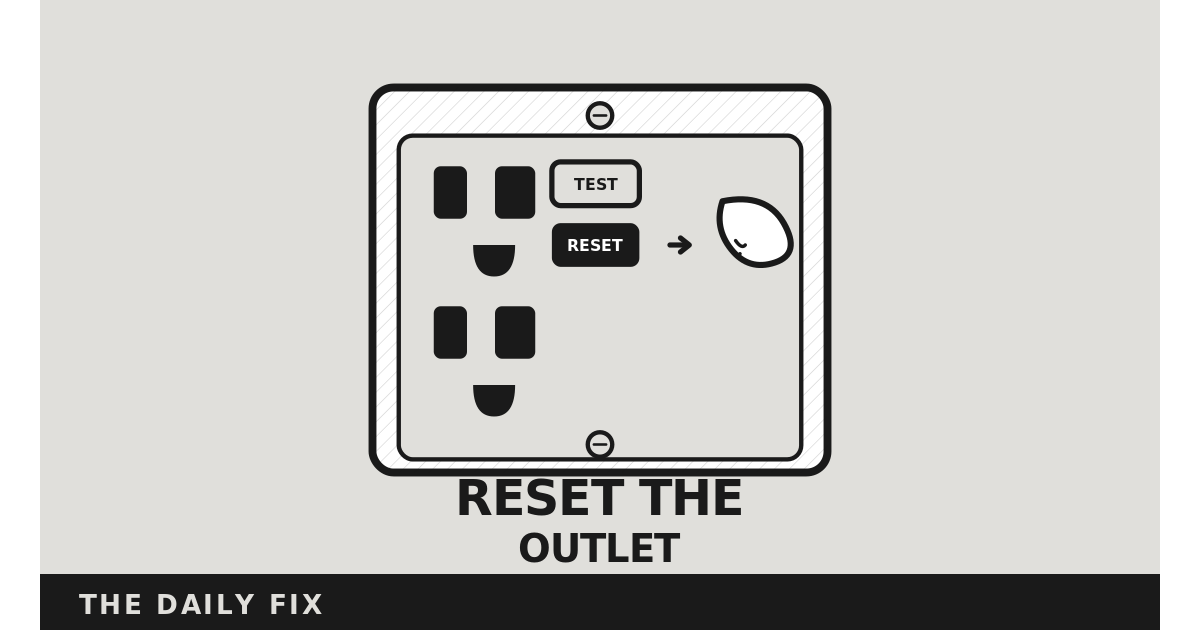
Outlet Not Working? It's Probably a GFCI — Here's the 10-Second Fix
If an outlet near water stopped working, it probably isn't broken — it tripped. Here's the fix, and why the tripped outlet might be in another room.
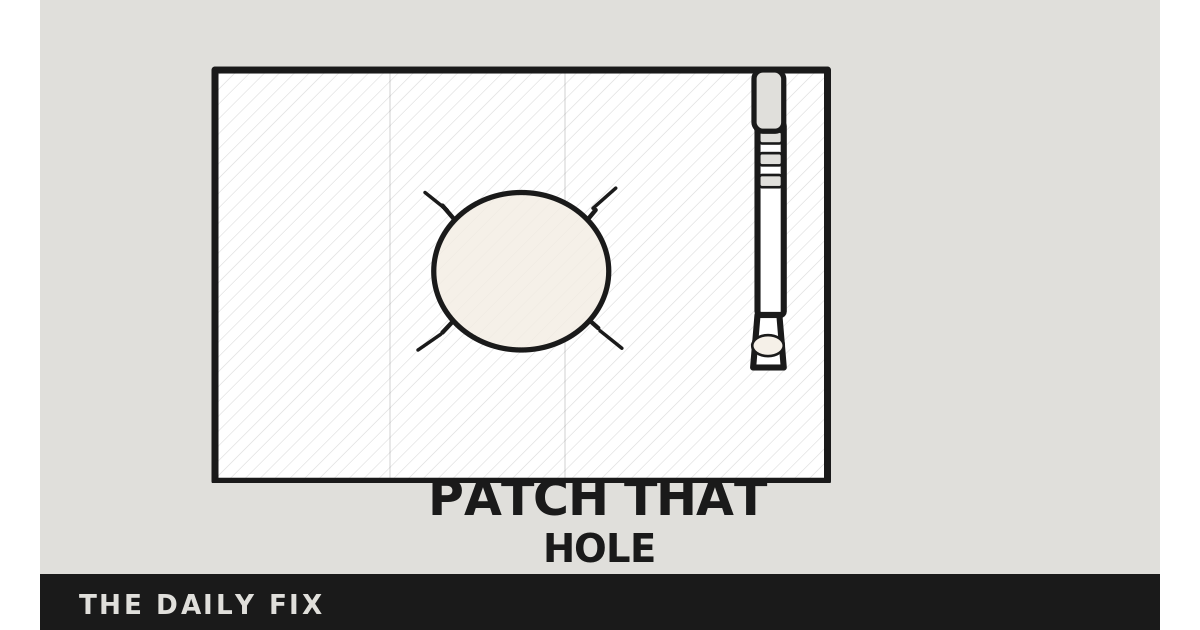
How to Patch a Hole in the Wall (Before You Lose Your Security Deposit)
Small nail holes and picture-hook gaps get deducted from your security deposit if you leave them. Here's how to patch them so they're invisible.