Outlet Not Working? It's Probably a GFCI — Here's the 10-Second Fix
If an outlet in your bathroom, kitchen, or anywhere near a sink stops working and the breaker looks fine, there’s a good chance it’s not broken at all — it tripped. GFCI stands for Ground Fault Circuit Interrupter, a safety device built into outlets near water that cuts power when it detects a current leak from moisture, a faulty device, or an overload. It’s doing exactly what it’s designed to do, and it has a built-in reset button. Here’s the part that confuses most people: one GFCI outlet can control several outlets on the same circuit, sometimes in a completely different room, so the dead outlet in your bedroom might be controlled by the GFCI in your bathroom.
Step 1: Find the GFCI outlet
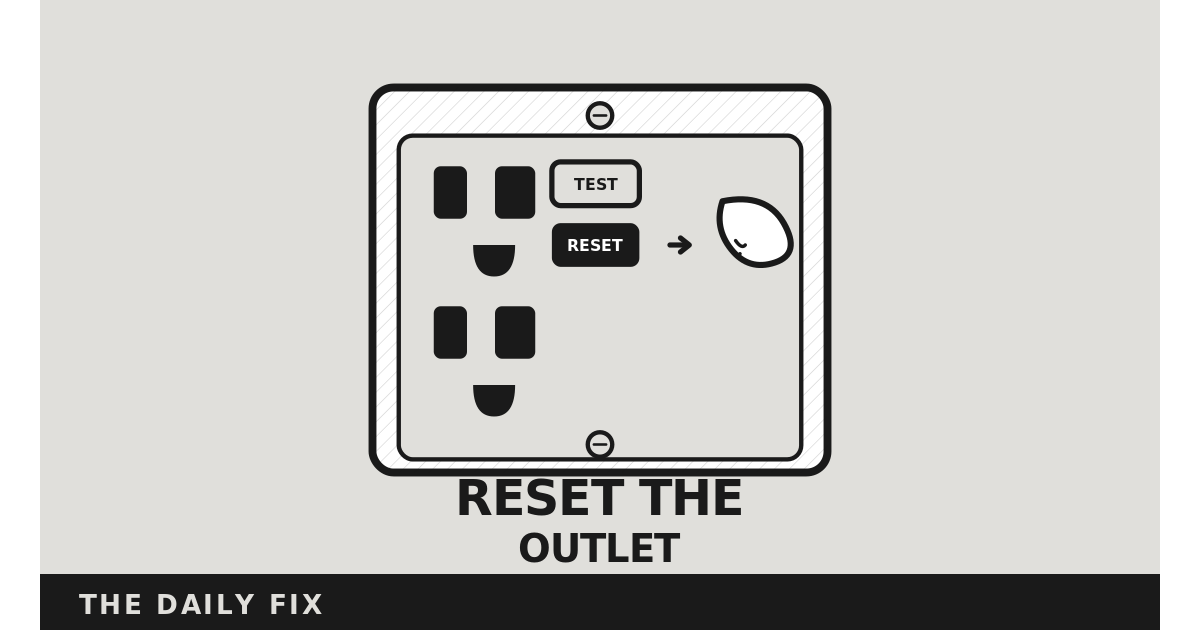
Look for an outlet with two small buttons on its face — one labeled RESET, one labeled TEST. These live almost exclusively in bathrooms, kitchens, or near water sources; in some apartments a single bathroom GFCI controls outlets throughout the unit. Check the garage or outdoor outlets, or ask your landlord, if you can’t find one.
Step 2: Press RESET
Press the RESET button firmly until you feel and hear it click into place. If it was tripped, it will have been slightly protruding — after pressing, it should sit flush.
Step 3: Test the outlets
Go back and test the outlet that wasn’t working with a phone charger or lamp. Also plug something into the GFCI outlet itself to confirm it has power.
Step 4: If it trips again immediately
Unplug everything on that circuit and reset again, then plug devices back in one at a time until it trips — that device needs repair or replacement. If the GFCI trips with nothing plugged in, there may be moisture in the outlet box or a wiring issue. Stop resetting it and contact your landlord.
Step 5: Test periodically
GFCI outlets should be tested every few months. Press TEST to intentionally trip it, confirm power cuts off, then press RESET to restore it. One that won’t trip on TEST, or won’t reset, needs replacing.
Mistakes to avoid
- Checking the breaker box first. For outlets near water, check the GFCI first — it’s the more common cause and takes 10 seconds to rule out.
- Assuming the GFCI is in the same room. GFCI outlets control circuits, not just themselves — check every bathroom and kitchen outlet if you can’t find a tripped one nearby.
Find the GFCI outlet, press RESET firmly until it clicks, and test the dead outlet. Ten seconds, no tools, no repair call.
Related Posts

How to Re-Caulk a Bathtub (Stop Water From Getting Into Your Walls)
Cracked caulk around your tub isn't cosmetic — it's a path for water to get behind your walls. Here's how to redo it properly in an afternoon.
How to Patch a Hole in the Wall (Before You Lose Your Security Deposit)
Small nail holes and picture-hook gaps get deducted from your security deposit if you leave them. Here's how to patch them so they're invisible.
How to Unclog a Toilet (Without Making It Worse)
Whatever you do, don't flush again. Here's the right plunger, the right technique, and how to clear a toilet clog in under five minutes.