How to Read Your Lease Before You Sign (8 Things That Matter Most)
A lease is a binding legal contract, and every line in it was written to protect the landlord. That doesn’t mean it’s unfair — it means you need to read it with the same attention you’d give any document that governs where you live and how much you spend for the next year. You’re also allowed to negotiate lease terms before you sign, something most renters don’t know. Once you sign, the terms are locked in. All you need is your lease, a notepad, and forty-five uninterrupted minutes — you don’t need a lawyer to understand a standard residential lease.
1. Rent, due date, grace period, and late fees
Confirm the exact rent amount, the due date, any grace period, and the late fee. Grace periods — often three to five days — aren’t universal; some leases start charging on day two. A $75 late fee on $1,200 rent adds up. Make sure the due date matches what you were told verbally.
2. Security deposit terms
Note the exact deposit amount, what conditions allow deductions, and the deadline for returning it after move-out. Most states require return within 14 to 30 days with an itemized list — confirm your state’s timeline is reflected, since state law applies regardless of what the lease says.
3. What you’re responsible for maintaining
Some leases require you to replace air filters, handle pest control after the first 30 days, or maintain smoke detector batteries. Read this section carefully — these are tasks that can be used to charge you at move-out if skipped.
4. Pet policy
Check whether pets are allowed, what species and sizes, and whether there’s a pet deposit or monthly fee — and whether it’s refundable. Fees can add $50–$100 a month. Getting a pet without written approval can be grounds for lease termination.
5. Guest policy and subletting rules
Many leases cap guest stays at 7–14 consecutive days and may restrict subletting entirely. If you travel for work, want to Airbnb, or a partner might stay extended periods, understand this before you sign.
6. Early termination
Read this before you need it. Most leases require 30–60 days’ written notice and a fee — often one to two months’ rent — to break the lease early. Some offer a buyout option.
7. Renewal terms
Find how much notice you must give before move-out, and whether the lease auto-renews. Some leases convert to month-to-month at a higher rate if you miss a 60-day notice window — missing that deadline can cost two extra months of rent.
8. Addendums
Read every addendum — move-in checklists, parking agreements, pet addendums, community rules. They carry the same legal weight as the main lease, and some of the most restrictive terms are buried here because landlords know most tenants skip them.
Mistakes to avoid
- Relying on verbal promises. If it’s not in writing, it doesn’t exist legally — get anything a landlord tells you added to the lease or confirmed in writing.
- Signing under time pressure. A legitimate lease can wait 24 hours for you to read it.
Confirm the rent, due date, and late fees. Understand your deposit terms. Know what you’re responsible for maintaining. Check the pet and guest policies. Find the early termination and renewal terms. Read every addendum. Forty-five minutes here saves real money and stress over the next year.
Related Posts
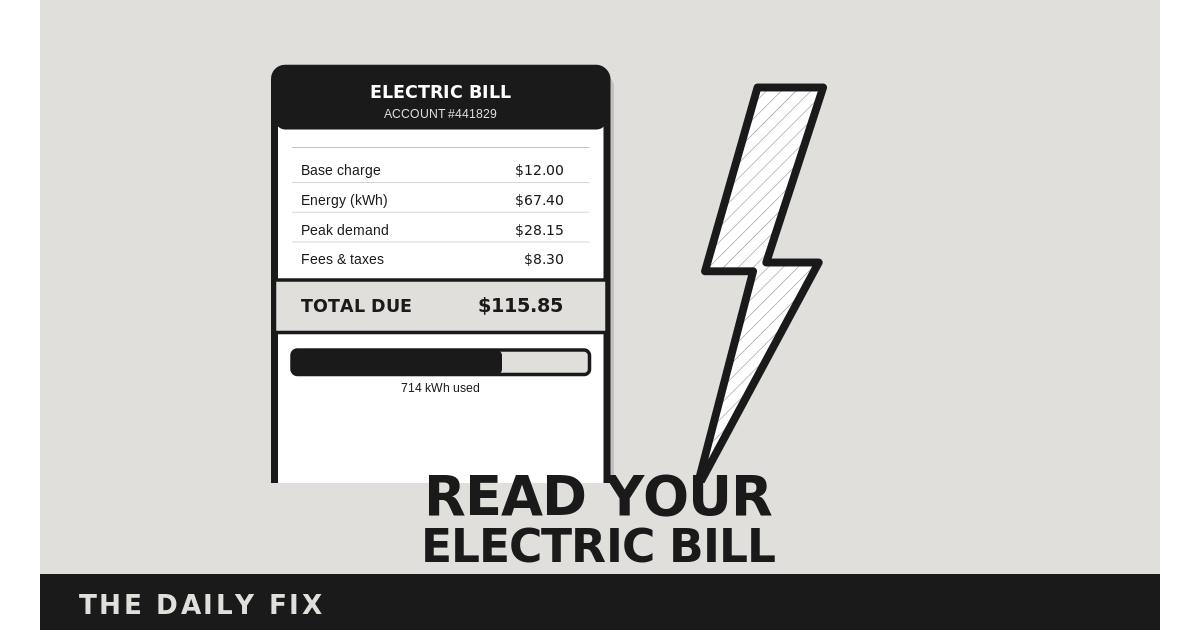
How to Read Your Electric Bill (And Find Where You're Wasting Money)
Understanding four numbers on your electric bill can save you $20 to $40 a month. Here's how to read it and find where you're wasting money.

Renter's Insurance Explained (What It Covers, What It Costs, How to Get It)
For about $12 a month, renter's insurance covers what your landlord's policy doesn't: your stuff. Here's what it covers and how to get it in 15 minutes.

How to Get Your Security Deposit Back
Landlords keep more of your deposit than they should when you don't know the rules. Here's how to get every dollar back.